When comparing a mature hairline with a receding hairline, the most useful distinction is not simply how high the hairline sits. What matters is how much it has changed, whether the movement has stabilised and whether the hair around the temples, frontal area or crown is becoming progressively finer.
A modest shift from a lower youthful hairline can create a more defined adult shape without leading directly to baldness. Continued recession may instead be an early sign of male pattern hair loss. At Fortes Clinic, we assess the pattern and progression of these changes rather than drawing a conclusion from the hairline shape alone.
What Is a Mature Hairline?
A mature hairline is a non-medical term used to describe a slight movement away from the lower, rounder hairline often seen during adolescence. The temples may become a little more defined, and the frontal hairline can sit slightly higher while retaining consistent density immediately behind it.
The main characteristic is stability. Once the new position has developed, a mature hairline may remain relatively unchanged for years. There is no single measurement or shape that confirms maturity, however, and having a mature hairline does not prevent male pattern hair loss from developing separately in the future.
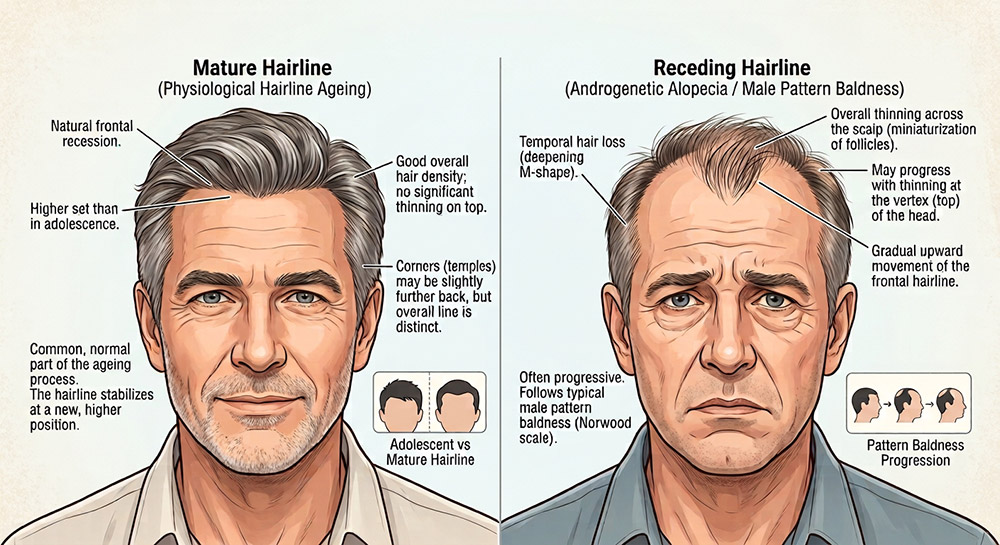
A stable adult hairline can sit slightly higher without continuing to recede.
What Does a Receding Hairline Look Like?
A receding hairline continues to move backwards rather than settling into a stable adult position. The earliest changes are often most noticeable above the temples, creating deeper corners or a more pronounced M shape, although the frontal centre can also begin to lose density.
With male pattern hair loss, the hairs in affected areas gradually become finer and shorter before they disappear. Recession may also occur alongside thinning through the frontal scalp or crown, making the pattern more suggestive of progressive hair loss rather than a limited change in hairline shape. The British Association of Dermatologists publishes patient information on male pattern hair loss, including how the process of miniaturisation works and which treatments have evidence behind them.
Mature Hairline vs Receding Hairline: The Main Differences
The two can look similar at a single point in time, particularly during the early stages. Looking at the wider pattern and how it develops over several months provides more useful information than relying on forehead height alone.
Comparison of Mature and Receding Hairlines Across Key Criteria
| Criterion | Mature hairline | Receding hairline |
|---|---|---|
| Progression | Stabilises and stays put | Continues moving backwards |
| Temple shape | Mild, balanced definition | Increasingly deep corners, more pronounced M shape |
| Hair quality behind hairline | Density stays consistent | Hairs become finer and shorter before disappearing |
| Other areas | Usually unaffected | Crown or frontal thinning often develops alongside |
| What confirms it | Stability over months | Continued change over months |
Note: A single photograph cannot distinguish between a mature and a receding hairline; tracking changes over time or receiving a clinical assessment is necessary to confirm the pattern.
The main differences include:
- Progression: A mature hairline tends to stabilise, while a receding hairline continues moving backwards.
- Temple shape: Mild, balanced definition can occur with maturation, whereas recession often creates increasingly deep corners.
- Hair quality: Density generally remains consistent behind a mature hairline, while progressive loss produces finer, shorter hairs.
- Other areas: Crown or frontal thinning alongside hairline movement is more suggestive of male pattern hair loss.
- Time: A recent photograph cannot confirm the difference. Changes become clearer when comparable images are reviewed over time.
At What Age Does a Mature Hairline Develop?
Hairline maturation is often noticed from the late teenage years into the twenties, but there is no exact age at which it must begin or finish. Genetics, the original shape of the hairline and natural variation all affect when a change becomes noticeable.
Age alone cannot distinguish maturation from hair loss because male pattern hair loss can also begin after puberty. A changing hairline in the early twenties may stabilise, continue receding or show a combination of maturation and genetic thinning, so the behaviour of the hairline matters more than age by itself.
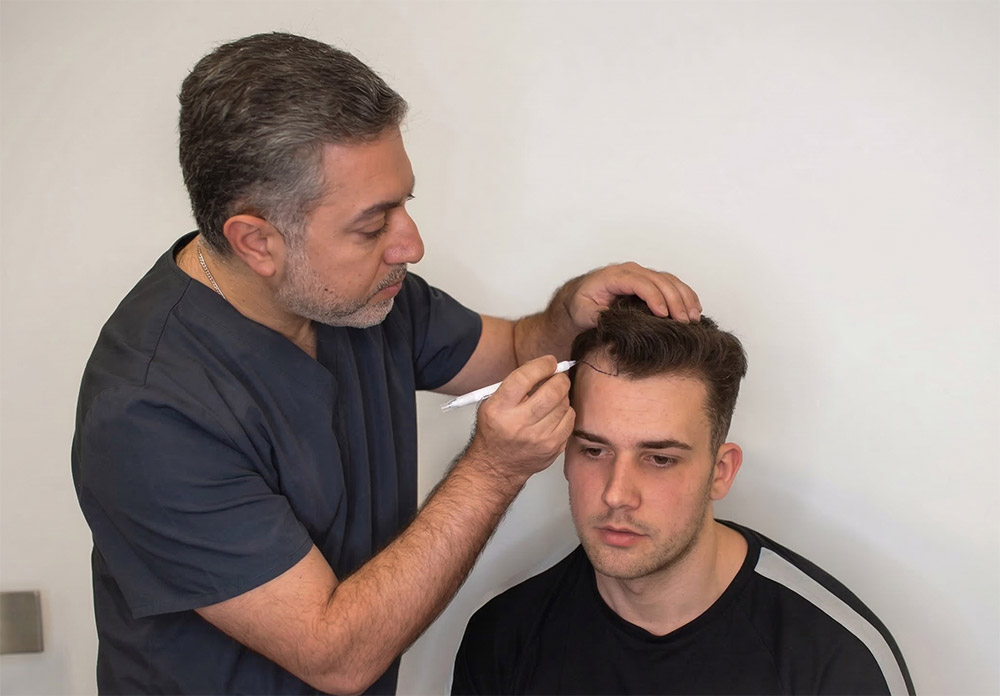
A clinical assessment considers the hairline, temples, frontal scalp and crown rather than the outline alone.
How to Tell Whether Your Hairline Is Still Receding
The most reliable way to judge progression at home is to compare clear photographs taken under similar conditions. Use the same lighting, angle and hairstyle, and avoid comparing a wet-hair photograph with one in which the hair is dry or styled for greater coverage.
Look beyond the outline itself. Increasing scalp visibility, reduced density around the temples, shorter hairs at the front or new thinning at the crown can all indicate that the change is continuing. Day-to-day shedding is less useful because the amount of hair seen during washing can vary without showing where density is being lost.
Does a Mature Hairline Always Lead to Baldness?
No. A hairline can move slightly from its adolescent position and then remain stable without progressing to significant baldness. The term describes the apparent change in position and shape; it is not a diagnosis or a prediction of what the hair will do later.
It is still possible for someone with a stable adult hairline to develop male pattern hair loss in the future. Family history may increase suspicion, but it cannot determine the eventual pattern or speed of loss on its own.
When Should a Changing Hairline Be Assessed?
Assessment is worth considering when the hairline continues to move, the temples are becoming noticeably deeper or thinning is developing behind the frontal edge or at the crown. Seeking advice earlier can make it easier to establish a baseline and discuss options intended to preserve existing hair.
Sudden, patchy or markedly uneven loss should not automatically be labelled as a maturing or receding hairline. Redness, scaling, tenderness, scarring or rapid shedding may point to another hair or scalp condition and should be assessed on its own merits. The NHS guidance on hair loss sets out the other common causes and when to see a GP, which is worth reading if the pattern does not look like gradual recession.
What Can Be Done About a Receding Hairline?
Treatment depends on whether the change is active, how far it has progressed and what you want to achieve. For early male pattern hair loss, clinically appropriate medication may help slow further recession and support hair that is still growing, although results vary and continued use may be required.
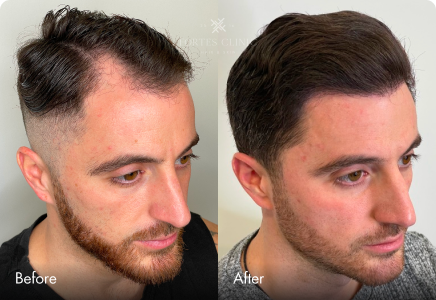
PRP may be considered for suitable areas of early thinning, while a hair transplant can restore selected areas where permanent loss has become established, and donor hair is adequate. Scalp micropigmentation offers a non-surgical way to reduce visible contrast or create a closely shaved effect, but it does not grow new hair or stop the underlying loss.
Mature Hairline or Receding: What the Pattern Over Time Tells You
The shape of a hairline can offer clues, but it cannot provide the whole answer on its own. A slight, stable change with consistent density behind it is more compatible with maturation, while continued movement, finer frontal hair and thinning elsewhere suggest that the hairline may be receding.
If you are unsure, clear photographs and a clinical assessment can help separate a stable adult hairline from progressive loss. The earlier the pattern is understood, the easier it is to make a measured decision about monitoring or treatment without assuming that every change means baldness.
Book a Hair Loss Consultation in London
If your hairline is continuing to change, a consultation at Fortes Clinic can help determine whether it appears stable or shows signs of progressive hair loss. We will assess the hairline, frontal scalp and crown, review how the pattern has developed and explain any suitable next steps. Contact us today to arrange a private consultation.
Contact Fortes Clinic
Email: hello@fortesclinic.co.uk
Phone: 020 7286 0000 or 07561 422719
Online Booking Form
Location: Fortes Clinic, 22 Clifton Road, Little Venice, London, W9 1ST
Mature and Receding Hairline FAQs
Is a widow’s peak the same as a receding hairline?
No. A widow’s peak is a natural V-shaped point at the centre of the hairline and may be present from childhood. A receding hairline involves a change from its previous position, often with the areas above the temples moving backwards over time.
Can a mature hairline be uneven?
Yes, natural hairlines are not always perfectly symmetrical, and one side may sit slightly higher than the other. Increasing asymmetry or continued movement on one side is more significant than a stable difference that has always been present.
Can one side of the hairline recede faster than the other?
Hairline recession can progress unevenly, particularly during its earlier stages. A pronounced or rapidly developing change on one side should be assessed because traction, inflammation and other scalp conditions can also cause localised hair loss.
Why does my hairline look more receded when my hair is wet?
Wet hair tends to clump together and lie flatter, making more of the scalp and hairline visible. This can exaggerate the appearance of recession, so progress photographs should be taken with the hair dry and under consistent lighting.
Is a receding hairline inherited from your mother or father?
Male pattern hair loss is influenced by genes inherited from both sides of the family, not only the mother’s side. Family history can increase the likelihood of hair loss, but it cannot predict its exact pattern, age of onset or speed of progression.
Can tight hairstyles cause the hairline to recede?
Yes. Hairstyles that repeatedly pull on the frontal and temporal hairline can cause traction alopecia. Early changes may improve when the tension is removed, but prolonged traction can damage follicles and lead to permanent loss.
Can wearing hats cause a receding hairline?
Wearing a normally fitted hat does not cause male pattern hair loss or make the hairline recede. Exceptionally tight headwear that repeatedly pulls or rubs against the same area could contribute to breakage or traction, but this is different from genetic hair loss.
Does a receding hairline always occur with crown thinning?
No, recession at the temples and thinning at the crown can develop independently. Some men experience both as male pattern hair loss progresses, while others notice a change in one area without obvious thinning in the other.
Can a hair transplant restore a receding hairline?
A hair transplant can restore selected areas of a receding hairline when the donor area is suitable, and the wider pattern of hair loss has been considered. Hairline design must account for facial proportions, available grafts and the possibility of further natural hair loss.
How quickly does a receding hairline progress?
Progression varies considerably, with noticeable changes occurring over several years in some men and more quickly in others. Photographs taken every few months under consistent conditions provide a more useful record than checking the hairline each day.