

Female Hair Transplant London

female hair transplant London female hair transplant women’s hair transplant London hair transplant for women

Subtle, Natural Hair Restoration Designed for Women

For many women, hair loss develops gradually as reduced volume, widening of the part line or overall thinning rather than clearly defined bald areas. Hair transplant treatment can help restore natural density by relocating healthy follicles to areas where fullness has been lost, supporting a balanced and natural-looking result.

For those considering a female hair transplant in London, treatment planning focuses on subtle improvement and long-term harmony with existing hair. At Fortes Clinic, techniques including FUE, FUT and combined procedures are selected according to donor suitability, hair characteristics and the level of restoration required.

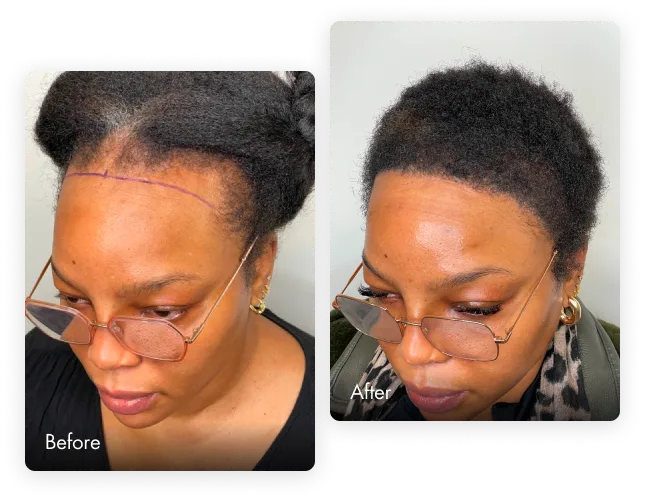
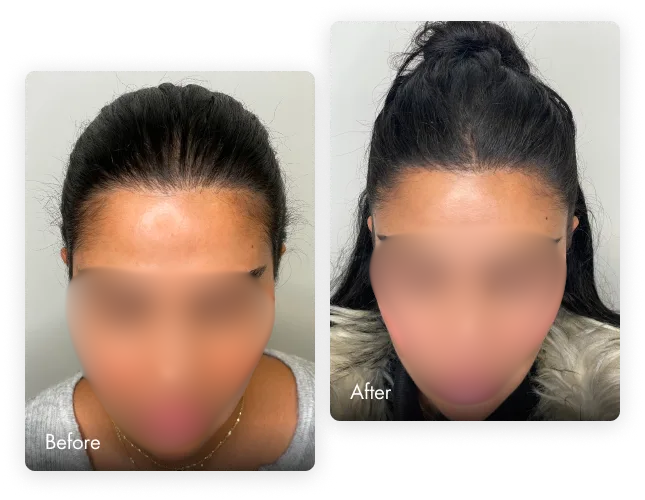
Before and After

The images above are displayed with the consent of the patients. The outcomes shown are only relevant for these patients and do not necessarily reflect the results other patients may experience. Our team will discuss any factors that could influence the results that you may get.

What Is a Hair Transplant for Women?

female hair transplant London, female hair restoration, hair transplant for women, natural hair density restoration

Female hair transplant treatment involves relocating healthy hair follicles from stable donor areas to regions affected by thinning or reduced density. These follicles are typically resistant to ongoing hair loss, allowing transplanted hair to continue growing once established.

For women, restoration is often centred on preserving existing hair while improving overall fullness. Careful attention is given to graft placement, direction and spacing so that transplanted follicles blend naturally and support soft, realistic density rather than an obvious change in appearance.

female hair transplant London, female hair restoration, hair transplant for women, natural hair density restoration

Hair Transplant Options Available

At Fortes Clinic, several hair transplant techniques may be used depending on the pattern of thinning and individual treatment goals. The most appropriate approach is determined during consultation following a detailed clinical assessment.

FUE Hair Transplant

A FUE hair transplant is commonly chosen for women as it allows individual follicular units to be extracted and transplanted with precision. This method supports discreet healing and is well suited to improving density along the hairline or part line while preserving surrounding hair.

FUT Hair Transplant

A FUT hair transplant, also known as the strip method, may be recommended when higher graft numbers are needed to improve overall scalp density. This technique allows efficient graft harvesting and can be appropriate for women with strong donor hair and larger treatment areas.

Combined FUE and FUT Hair Transplant

In selected cases, combining FUE and FUT techniques allows a greater number of grafts to be harvested safely. This approach may be considered when more extensive density restoration is required while maintaining a natural overall balance.

Benefits of a Female Hair Transplant

Hair transplant treatment for women is designed to restore density in a way that feels natural and proportionate. Careful planning ensures results blend with existing hair and support long-term hair restoration goals.

Key benefits of a female hair transplant include:

Improved Hair Density

Helps restore fullness in thinning areas.

Natural Blending

Grafts are placed to match existing hair direction and texture.

Hairline Refinement

Supports subtle enhancement rather than dramatic change.

Personalised Treatment Planning

Technique selection is based on individual hair characteristics.

Long-term Restoration

Transplanted follicles are intended to grow permanently once established.

Am I a Good Candidate for a Female Hair Transplant?

Suitability for a female hair transplant depends on the pattern and cause of hair thinning, as well as donor hair availability. A detailed consultation helps determine whether surgical restoration is appropriate and what level of improvement can realistically be achieved.

You may be a suitable candidate for a female hair transplant if:

You have sufficient donor hair

Healthy follicles are needed to achieve reliable density.

Your hair thinning pattern is suitable

Certain forms of diffuse thinning respond better to transplantation.

Your scalp health is stable

Healthy tissue supports healing and graft survival.

You have realistic expectations

Understanding achievable outcomes helps support long-term satisfaction.

The Hair Transplant Process

Group 456

Consultation and Treatment Planning

Treatment begins with a detailed assessment of hair thinning patterns, donor density and long-term goals. During consultation, the most suitable technique, whether FUE, FUT or a combined approach, is recommended based on individual needs and hair characteristics.

Group 456 (1)

Donor Hair Preparation

Donor follicles are selected from areas of stable hair growth, usually at the back or sides of the scalp. The harvesting method varies depending on the chosen technique and is planned carefully to preserve a natural appearance within the donor area.

Group 456 (2)

Graft Placement

Recipient areas are prepared to follow natural hair direction, angle and spacing. Each graft is placed with precision so that new growth blends smoothly with existing hair and supports even density.

Group 456 (3)

Recovery and Hair Growth

After treatment, transplanted follicles enter a normal growth cycle. Initial shedding is expected before new growth begins over the following months, gradually improving fullness and overall scalp coverage.

FUT hair transplant London, surgeon-led hair transplant, natural hairline restoration, FUT hair transplant results

Recovery and Aftercare Following Female Hair Transplant

FUT hair transplant London, surgeon-led hair transplant, natural hairline restoration, FUT hair transplant results

Recovery varies depending on the technique used, but most men return to normal daily activities within a short period. Mild swelling or sensitivity may occur during early healing, and aftercare instructions are provided to help protect newly transplanted grafts.

Hair growth develops gradually over several months as follicles establish in their new location. Regular follow-up guidance helps ensure healing progresses well and supports the best possible long-term outcome.

Recovery and Aftercare Following Female Hair Transplant

Recovery varies depending on the method used, but most individuals return to normal daily activities within a short period. Mild swelling or sensitivity may occur during early healing, and aftercare instructions are provided to help protect grafts as they settle.

Hair growth develops gradually over several months as transplanted follicles establish in their new location. Regular aftercare guidance supports healing and helps ensure natural, long-term results.

Female Hair Transplant Cost in London

The cost of a female hair transplant in London depends on the technique used, the number of grafts required and the complexity of the procedure. At Fortes Clinic, treatment starts from £1,999, with final pricing confirmed following consultation and personalised planning.

female hair transplant London, female hair restoration, hair transplant for women, natural hair density restoration

Why Choose Us for Female Hair Transplant in London

female hair transplant London, female hair restoration, hair transplant for women, natural hair density restoration

Choosing a clinic for female hair restoration requires careful consideration. At Fortes Clinic, treatment is delivered in a professional medical environment with a focus on personalised planning and natural-looking outcomes.

Reasons women choose us for hair transplant treatment include:

Surgeon-led planning

Treatment plans are tailored to individual hair characteristics and goals.

Multiple techniques available

FUE, FUT and combined approaches allow flexible treatment options.

Natural outcome focus

Density and hairline refinement are planned conservatively for realistic results.

Personalised care

Every treatment is based on clinical assessment rather than fixed approaches.

Structured aftercare

Ongoing guidance supports healing and long-term hair growth.

Patients from London, across the UK and internationally choose Fortes Clinic for its clinical standards, discreet setting and considered approach to hair restoration.

Take the first step towards regaining your confidence and living life to the fullest today.

Meet Dr. Ahmad Saaed​

wj6IKWgjFu2z2SE6aTyadj1n8Eh4XjFs 1

FOUNDER / LEAD PRACTITIONER

Dr Saaed graduated from Medical school with a degree in Medicine and Surgery (MBChB) in 1997, later specialising as an Anaesthetist. He then trained professionally as a hair surgeon and trichologist and has been a member of the International Society of Hair Restoration Surgery since 2017. Dr Saaed has qualified in PRP Treatment with Dr Danial Sister, a renowned specialist in PRP and an author of the book “Platelet Rich Plasma, The New Frontier in Regenerative and Aesthetic Medicine”.

Book a Consultation for Female Hair Transplant in London

If you are considering a female hair transplant in London, a consultation allows you to explore your options and understand which treatment approach is most suitable for your hair thinning pattern and goals. Personalised assessment ensures decisions are based on clinical evaluation and realistic outcomes. Contact us today to find out more.

Contact Fortes Clinic

Email: hello@fortesclinic.co.uk
Phone: 020 7286 0000 or 07561 422719
Online Booking Form
Location: Fortes Clinic, 22 Clifton Road, Little Venice, London, W9 1ST

Frequently Asked Questions

How long does a female hair transplant take?

Treatment time depends on the number of grafts and the method used, but most procedures are completed within a single day. Larger cases may require longer sessions.

Transplanted hair usually sheds within the first few weeks before new growth begins. Visible improvement often starts after three to four months, with fuller results developing gradually.

Yes, graft placement is planned carefully to match natural hair direction, density and texture so the transplanted hair blends seamlessly with existing growth.

Transplanted follicles are taken from areas resistant to ongoing hair loss, meaning they are intended to continue growing long-term once established.

FUE is commonly chosen for women, but FUT or combined techniques may be recommended depending on donor hair, thinning pattern and treatment goals.

Yes, hair transplant treatment can be used to restore density in the part line and other areas of diffuse thinning when suitable donor hair is available.

If surgery is not appropriate, non-surgical hair restoration options may be discussed during consultation to help manage hair thinning.

Request a Consultation with Dr Saaed

Begin with a private, clinician-led consultation to discuss suitability, options, and expected outcomes.