Fortes Clinic | Last updated October 2026
The donor area is the part of the scalp from which healthy follicles are taken during a hair transplant, usually across the back and sides of the head. After the procedure, this area must heal while retaining enough surrounding hair to preserve natural-looking coverage.
Understanding what happens to the donor area after a hair transplant also means distinguishing between two types of regrowth. Hair that has only been shaved will grow again, but follicles removed from the donor area do not regenerate because they have been transferred permanently to the recipient area.
The Donor Area Is a Finite Source of Transplantable Hair
Hair follicles across the back and sides of the scalp are generally more resistant to the hormonal effects that cause male pattern hair loss. This makes them suitable for transplantation into areas such as the hairline, frontal scalp or crown.
However, the donor area does not contain an unlimited supply of hair. Its density, distribution, hair calibre and long-term stability determine how many grafts can be removed without leaving the area looking visibly thin. Donor assessment is therefore one of the most important stages of planning a hair transplant.
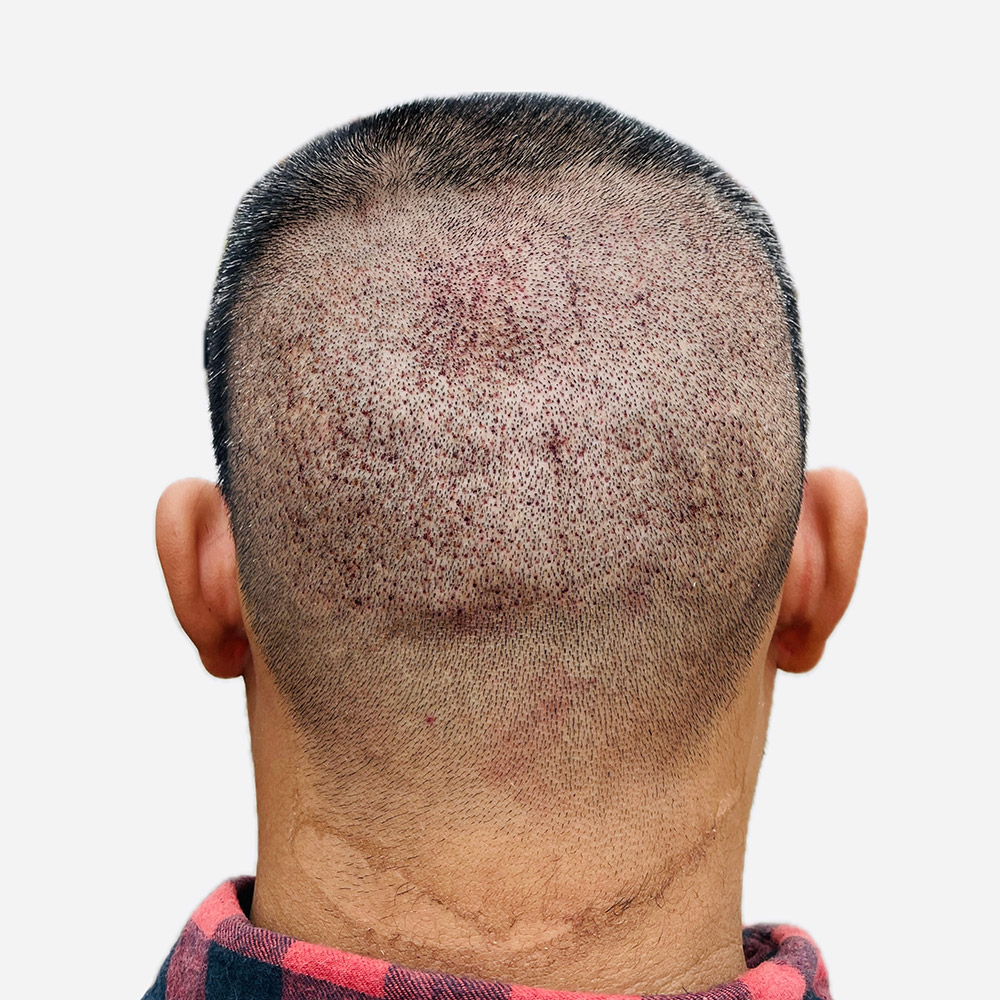
The donor area provides the finite supply of healthy follicles used to restore thinning or bald areas of the scalp.
FUE and FUT Affect the Donor Area Differently
Both FUE and FUT transfer follicles from the donor area to another part of the scalp, but they remove those follicles in different ways. This affects the healing pattern and the scarring left behind.
The Donor Area After FUE
During FUE, follicular units are removed individually through small circular openings distributed across the donor region. These extraction points close as the skin heals, leaving small, dot-like scars that are generally concealed by the surrounding hair when the grafts are harvested evenly. FUE is not completely scarless, and these marks can become more noticeable when the scalp is shaved very closely.
The Donor Area After FUT
During FUT, a narrow strip of hair-bearing scalp is removed before the edges are closed. This creates a single linear healing site rather than individual extraction points, with the resulting scar usually covered by the hair growing above and below it. Visibility depends on the individual healing response, the width of the scar and how short the surrounding hair is worn.
How Long Does the Donor Area Take to Heal?
Surface healing in the donor area generally takes place during the first one to two weeks. Redness, tenderness, tightness and temporary numbness can occur during this period, while small scabs develop across FUE extraction sites or along the closed FUT incision.
The deeper tissues and resulting scars continue to mature after the surface has healed. Redness and altered sensation can therefore take longer to settle, particularly after a larger procedure, while the surrounding hair gradually regrows to provide more coverage.
Does Hair Grow Back in the Donor Area?
No, follicles that have been completely removed do not grow back in their original positions. They have not been destroyed or discarded; they have been transferred to the recipient area, where they are intended to establish a blood supply and continue producing hair.
What grows back in the donor area is the hair from follicles that remain. This includes hair that was shaved before the procedure and the untouched hair between extraction sites. When grafts are removed in a controlled and evenly distributed pattern, this remaining growth preserves the overall appearance of density.
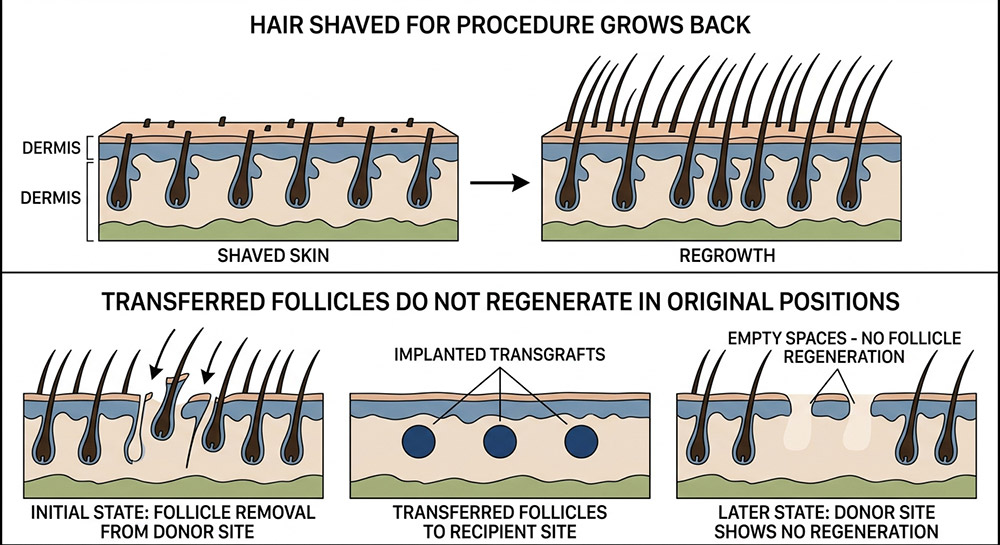
Hair shaved for the procedure grows back, but transferred follicles do not regenerate in their original positions.
Temporary Shedding Can Affect the Donor Area
Some patients experience temporary shedding in the donor area after a hair transplant. This is known as donor shock loss and affects existing hairs surrounding the extraction sites or FUT incision rather than the follicles that have been transferred.
Donor shock loss generally resolves as the affected follicles return to their normal growth cycle. Persistent thinning or an increasingly patchy appearance should be assessed, particularly if there are concerns about healing, circulation or the number and distribution of grafts removed.
Donor Area Overharvesting Can Cause Permanent Thinning
Overharvesting occurs when too many follicles are removed, or extraction is concentrated too heavily within particular parts of the donor area. This can leave permanent patchiness, visible thinning or an uneven appearance that becomes especially apparent with shorter hairstyles.
At Fortes Clinic, we calculate graft numbers based on the available donor supply rather than pursuing the highest possible number. We also consider the likelihood of continued hair loss and whether the patient may need further treatment in the future.
How to Care for the Donor Area After a Hair Transplant
The donor area should be washed only as instructed and protected from scratching, rubbing and unnecessary pressure during the early recovery period. Scabs should be allowed to separate naturally rather than being picked or removed before the skin underneath has healed.
At Fortes Clinic, we provide individual instructions covering washing, sleeping, exercise, sun exposure, hair products and any medication required after the procedure. These instructions vary according to whether FUE or FUT was performed and take priority over general advice found online.
When Should You Contact the Clinic About the Donor Area?
Redness, tenderness, scabbing and temporary changes in sensation can form part of normal donor-area healing. These symptoms should become progressively less noticeable rather than worsening as the recovery period continues.
Contact the clinic if you experience:
- Pain that becomes more severe rather than improving
- Redness that continues to spread
- Persistent or renewed bleeding
- Discharge or an unpleasant smell from the donor area
- Swelling that increases after initially settling
- Fever or feeling generally unwell
- Worsening patchiness or shedding that does not begin to improve
The Donor Area Shapes the Entire Hair Transplant Plan
A hair transplant must cover the recipient area without creating a new problem at the back or sides of the scalp. The follicles removed will not return to their original positions, so every graft must be selected and placed with the immediate result and future donor supply in mind.
At Fortes Clinic, we assess donor density, hair characteristics, scalp condition, previous procedures and the expected progression of hair loss before recommending a graft number or technique. This allows us to plan restoration while preserving balanced coverage and keeping future options open wherever possible.
Book a Hair Transplant Consultation in London
If you are considering a hair transplant, a consultation at Fortes Clinic will establish whether your donor area can support the coverage you want to achieve. We will assess your available hair, discuss the most suitable technique, and explain how we will protect your donor area throughout the procedure and recovery. Contact us today to arrange a private consultation.
Contact Fortes Clinic
Email: hello@fortesclinic.co.uk
Phone: 020 7286 0000 or 07561 422719
Online Booking Form
Location: Fortes Clinic, 22 Clifton Road, Little Venice, London, W9 1ST
Hair Transplant Donor Area FAQs
What is the donor area in a hair transplant?
The donor area is the region from which follicles are harvested for transplantation. It is usually located across the back and sides of the scalp, where the hair tends to be more resistant to male pattern hair loss.
Does hair grow back in the donor area after a hair transplant?
Hair that was shaved or trimmed will grow back from the follicles left in place. Follicles that were extracted do not regenerate in the donor area because they have been permanently transferred to the recipient area.
How long does the donor area take to heal?
Initial surface healing usually occurs within the first one to two weeks. Redness, tightness, numbness and scar maturation can take longer to resolve, particularly after a larger procedure or FUT.
What does the donor area look like after FUE?
Immediately after FUE, the donor area contains multiple small extraction points that can appear red and develop fine scabs. These sites close as it heals and are gradually concealed as the surrounding shaved hair grows back.
What does the donor area look like after FUT?
An FUT donor area has a closed linear incision across part of the back or sides of the scalp. As it heals, the surrounding hair usually covers the area, although a linear scar remains.
Will the donor area be permanently scarred?
Yes, both FUE and FUT create scars, although the pattern is different. FUE leaves small dot-like scars, while FUT produces a linear scar that can usually be concealed beneath the surrounding hair.
Can shock loss affect the donor area?
Temporary shedding can affect hairs around FUE extraction sites or an FUT incision. The affected follicles generally return to growth, but persistent or worsening patchiness should be reviewed by the clinic.
Why does the donor area feel numb or tight?
Temporary numbness, tingling or tightness can occur as the scalp heals and the small sensory nerves recover. These sensations generally improve over time, although you should contact the clinic if they become more severe or persist unexpectedly.
Can the same donor area be used for another hair transplant?
It may be possible to return to the donor area for a later procedure if sufficient suitable hair remains. The number of additional grafts available depends on the previous extraction pattern, donor density, scarring and the technique being considered.
What happens if the donor area is overharvested?
Overharvesting can leave the donor area permanently patchy or visibly thinned. Careful graft calculations and evenly distributed extraction are essential because the follicles removed from the donor area will not grow back there.