Fortes Clinic | Last updated September 2026
The early signs of male pattern baldness usually develop gradually. The hairline may begin to recede around the temples, density can reduce through the frontal scalp or crown, and individual hairs may become finer and shorter before an area looks visibly bald.
Recognising these changes early is not always straightforward because hairlines, shedding levels and natural density vary between individuals. The most reliable indicators are the pattern of the loss, changes in hair quality and whether the thinning continues to progress over several months.
Male Pattern Baldness Develops Through Follicle Miniaturisation
Male pattern baldness, also known as androgenetic alopecia, results from a combination of genetic and hormonal factors. In genetically susceptible follicles, dihydrotestosterone, or DHT, shortens the active growth phase and gradually reduces the size of the follicle.
This process is known as miniaturisation. The follicle initially remains active, but each new hair may grow back finer, shorter and lighter than the one before it. Repeated growth cycles can eventually leave the hair too fine to provide visible coverage before the follicle stops producing hair altogether.

Early recession often appears above the temples before the frontal hairline begins to look noticeably thinner.
The Early Signs of Male Pattern Baldness Usually Appear at the Hairline or Crown
Male pattern baldness tends to affect defined areas rather than causing equal thinning across the entire scalp. Some men first notice changes around the temples, while others notice reduced density at the crown.
Gradual Recession Above the Temples
The corners of the frontal hairline may begin to move backwards, creating deeper temple recessions or a more pronounced M shape. Continued movement and reduced density behind the edge are more significant than the original height or shape of the hairline.
Reduced Density Behind the Hairline
The frontal outline can initially appear unchanged while the hair immediately behind it becomes thinner. This may leave the scalp more visible under strong lighting or give the frontal hair less weight and coverage when styled.
Increasing Visibility at the Crown
Early crown thinning can be difficult to identify because the natural whorl already exposes some scalp. A widening area of visibility or a clear reduction in coverage compared with earlier photographs can indicate that density is declining.
Finer and Shorter Hairs
Miniaturised hairs do not grow with the same thickness or length as unaffected hair. A mixture of strong hairs and finer, shorter growth around the temples, frontal scalp or crown can therefore be an important early sign.
Normal Hair Shedding Is Not an Early Sign of Male Pattern Baldness
Some daily shedding is part of the normal hair growth cycle. The amount seen in the shower, on a pillow, or in a hairbrush can also fluctuate with washing frequency, hair length, and styling habits. Male pattern baldness concerns a progressive reduction in density within recognisable areas. Changes to the hairline, crown and calibre of the remaining hairs provide more useful information than counting individual shed hairs.
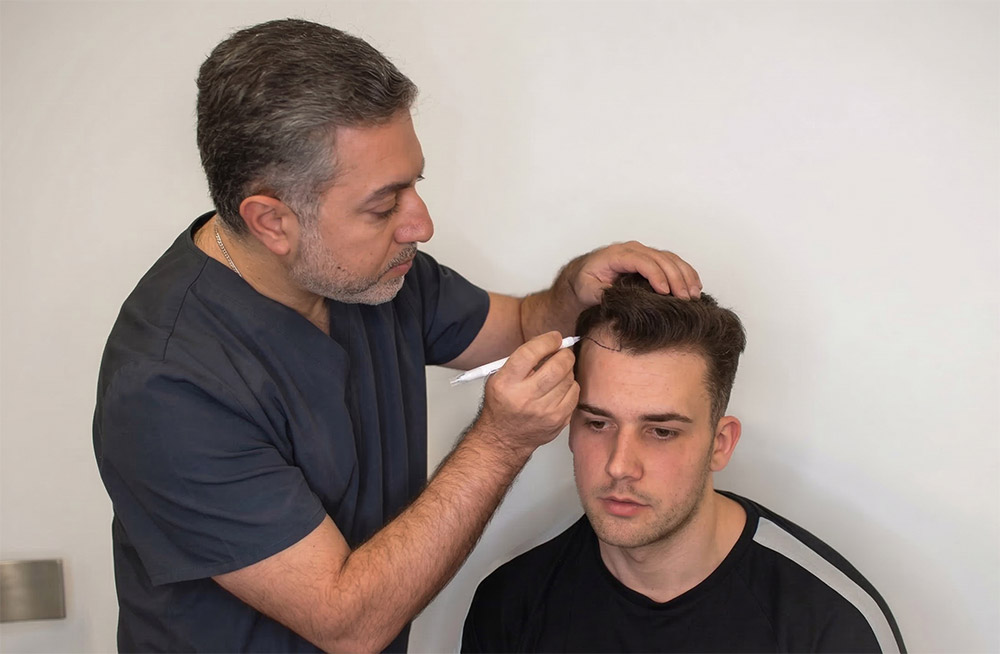
Consistent photographs make it easier to identify gradual changes in the hairline and crown over several months.
Hair Loss Signs That May Not Be Male Pattern Baldness
Male pattern baldness develops progressively and usually leaves the scalp looking otherwise healthy. Sudden widespread shedding, smooth isolated bald patches, broken hairs, or loss accompanied by redness, scaling, tenderness, or scarring does not follow its usual pattern.
These changes can be associated with temporary disruption of the hair growth cycle, traction, inflammation, nutritional deficiency, medication or another form of alopecia. More than one condition can also be present, so an unusual pattern needs to be assessed on its own merits.
How the Norwood Scale Classifies Male Pattern Baldness
The Norwood Scale classifies recognisable patterns of male hair loss, from limited recession at the temples to more advanced loss involving the frontal scalp and crown. It provides a consistent way to describe the current distribution and extent of the hair loss.
However, a Norwood stage cannot predict exactly how quickly the condition will progress or determine treatment by itself. Hair calibre, scalp health, donor density, age and the history of progression must also be considered before recommendations are made.
Tracking the Early Signs of Male Pattern Baldness Over Time
A single photograph cannot establish whether a hairline or crown is actively changing. Comparing the same areas over several months provides a more reliable view of progression and helps distinguish a stable feature from continuing hair loss.
For useful comparisons:
- Photograph the hairline, both temples and crown.
- Use the same lighting and camera angle each time.
- Keep the hair dry and styled in a similar way.
- Avoid comparing freshly washed hair with oily or heavily styled hair.
- Leave several weeks between checks rather than examining the hair every day.
- Look at changes in density and hair quality, not just the hairline outline.
Why Identifying Male Pattern Baldness Early Matters
Treatment has more potential to preserve hair while miniaturising follicles remain active. At this stage, non-surgical options can slow further loss and support the calibre of existing hairs, depending on the individual and the treatment used.
Hair transplantation has a different role because it redistributes suitable donor follicles into areas where density has already been lost. It does not prevent untreated hair elsewhere from continuing to thin, so stabilising active hair loss and planning for the future are important parts of deciding when a transplant is appropriate.
How We Assess Early Male Pattern Baldness at Fortes Clinic
At Fortes Clinic, we assess the hairline, temples, frontal scalp and crown as a complete pattern. We look for changes in density, variation in hair calibre and evidence of miniaturisation while also considering the quality and capacity of the donor area.
We will discuss when the changes began, how quickly they have progressed, any family history of hair loss and factors that could indicate another cause. From there, we can explain whether monitoring, non-surgical treatment or longer-term hair restoration planning is the appropriate next step.
Early Male Pattern Baldness: Pattern and Progression Matter Most
The earliest signs of male pattern baldness are not defined by one loose hair or a naturally high forehead. Continued temple recession, increasing visibility through the crown and the gradual replacement of stronger hairs with finer growth provide much clearer evidence that the follicles are miniaturising.
Identifying the pattern early allows existing hair, future progression and donor supply to be considered together. This creates a stronger basis for treatment and avoids making decisions based on an isolated area without accounting for how the hair may change over time.
Book a Hair Loss Consultation in London
If your hairline continues to change or you have noticed reduced density at the front of your scalp or crown, a consultation at Fortes Clinic can help determine whether you are showing early signs of male pattern baldness. We will assess your hair and scalp, review how the pattern has developed and explain the most appropriate next steps. Contact us today to arrange a private consultation.
Contact Fortes Clinic
Email: hello@fortesclinic.co.uk
Phone: 020 7286 0000 or 07561 422719
Online Booking Form
Location: Fortes Clinic, 22 Clifton Road, Little Venice, London, W9 1ST
Early Male Pattern Baldness FAQs
What is usually the first sign of male pattern baldness?
The first sign is usually gradual recession above the temples or a reduction in density through the frontal scalp. Some men instead notice increasing scalp visibility around the crown before the hairline changes significantly.
At what age can male pattern baldness begin?
Male pattern baldness can begin at any point after puberty, although the age and speed of onset vary considerably. Developing it at a younger age does not determine how quickly or how extensively the hair loss will progress.
Is male pattern baldness always inherited?
Genetics play a central role, but the tendency can be inherited from either side of the family. A family history increases the likelihood of pattern hair loss but cannot predict its precise shape, severity or age of onset.
Does male pattern baldness always begin at the hairline?
No. Some men first experience temple recession, while others notice thinning at the crown or reduced density across the frontal scalp. The hairline and crown can also begin changing at different times.
How can I tell the difference between a mature and receding hairline?
A mature hairline generally moves slightly from its adolescent position and then remains stable, with consistent density behind it. A receding hairline continues to move backwards and is more likely to show finer hairs, deeper temple recession or thinning elsewhere on the scalp.
Does seeing more hair in the shower mean I am going bald?
Not necessarily. Normal shedding can fluctuate, and the amount you see during washing depends partly on how often you wash or brush your hair. Progressive changes in density and hair calibre provide more useful evidence of male pattern baldness.
What does hair miniaturisation look like?
Miniaturisation creates a mixture of hair thicknesses within an affected area. Stronger hairs are gradually replaced by finer, shorter and lighter hairs that provide less coverage and may eventually become difficult to see.
Can the Norwood Scale confirm male pattern baldness?
The Norwood Scale can help classify a recognisable pattern, but it cannot confirm the diagnosis on its own. We also consider progression, hair calibre, scalp health, family history and whether the loss could have another cause.
Can early male pattern baldness be stopped?
Male pattern baldness cannot be cured, but appropriate treatment can slow its progression and help preserve existing hair in suitable patients. The response varies, and continued treatment is generally required to maintain its effect.
When should I have early hair loss assessed?
Assessment is worth considering when the hairline or crown continues to change, density is clearly reducing, or finer hairs are becoming noticeable in a defined pattern. Sudden, patchy or symptomatic hair loss should also be examined because it may have a different cause.